Pekanneut
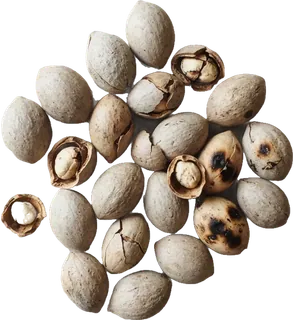
Shelled by hand from pecans grown in irrigated orchards along the Vaal and Harts rivers in the Northern Cape, sold loose in bags at roadside stalls through the winter harvest. Most of the crop is exported to China; the rest stays close to the trees that grew it.
How to order
Ek wil graag 'n sak pekanneute koop, asseblief.
Plain shelled or in-shell pecans need no questions, since the nut itself holds nothing else; it is only the candied or roasted bags, more common near Christmas, that may carry sugar syrup or butter, and asking “Is dit net neute, sonder botter?” — "is this just nuts, without butter?" — clears it. Transactions at farm stalls run in Afrikaans or English depending on the seller.
History
Pekanneut is Afrikaans for pecan nut. The orchards run along the Vaal and Harts rivers in the Northern Cape, fed by the Vaal-Harts irrigation scheme, built in the 1930s on land the Batlhaping Tswana had farmed before it was turned over to settle white farmers. Towns such as Jan Kempdorp, Hartswater and Warrenton grew up around the scheme. Pecans ripen through autumn and are gathered and shelled by hand through the winter months, work paid by the bag and carried out largely by Black and Coloured farm labourers hired by the season. Most of the harvest is exported, chiefly to China; what stays behind is sold loose from roadside stalls.
A nut. The pecan is a seed, nothing more, and the roadside bags hold nothing beyond the shelled kernels themselves — no coating, no salt, no oil, unless a seller has candied or roasted a batch, which some do for the Christmas market. Candying adds sugar and sometimes butter; buying plain shelled or still-in-shell nuts avoids that question entirely, and most of what is sold through winter at the orchard gates is exactly that, unflavoured. The only thing to settle is whether a particular bag has been through a sweet or spiced coating, and that is a question for the stall, not the nut.
Where to get it
Farm stalls and roadside tables along the roads between Jan Kempdorp, Hartswater and Warrenton in the Northern Cape, open through the winter harvest from April to July, a kilogram bag running under R100.