Umqokolo
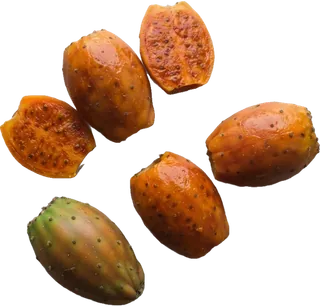
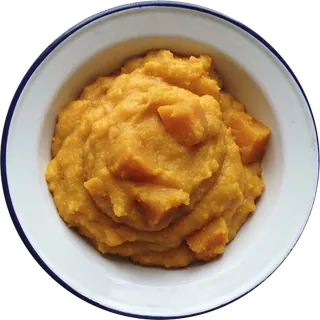
A hard yellow fruit from a thorn hedge common on Eastern Cape farms, halved, stoned and simmered down with sugar until the sourness settles into a thick preserve. Households around Butterworth and Alice spoon it onto bread at breakfast through the late summer picking season.
How to order
Ndicela umqokolo, enkosi.
Nothing needs clearing with the seller, since umqokolo is just kei apple and sugar cooked down, with no animal ingredient entering at any stage. Asking for it by name, “Ndicela umqokolo, enkosi,” is enough, though at farm stalls and padstalls across the Eastern Cape the transaction often runs in English rather than isiXhosa.
History
Umqokolo is isiXhosa for the Kei apple, called kei-appel in Afrikaans and Kei apple in English, after the Kei River that colonial forces fixed as a frontier line during the nineteenth-century wars against the Xhosa. The tree grows wild and is planted as a thorn hedge on farms across the Eastern Cape, from the Kei River valley through Butterworth, Alice and Grahamstown. Women pick the fallen fruit in late summer, halve and stone it, and boil it down with sugar in big pots for preserve kept through winter, spread on bread or stirred into porridge.
Kei apple and sugar are the only two things in the pot, and nothing else is added at any stage of picking, stoning or boiling. No milk, butter or gelatine enters the preserve the way it does in some fruit conserves, so there is no animal product to ask about at a market stall or farm stand selling umqokolo by the jar.
Where to get it
Farm stalls and padstalls along the N2 through the Eastern Cape, and home kitchens in towns like Butterworth, Alice and Kei Mouth, sell it by the jar after the fruit ripens between January and March, for roughly R40 to R60 a jar.