Chakod Saag
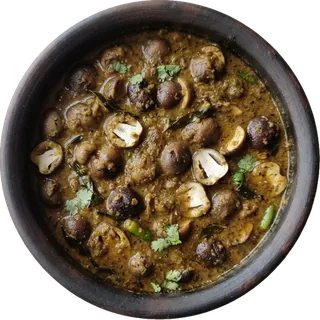
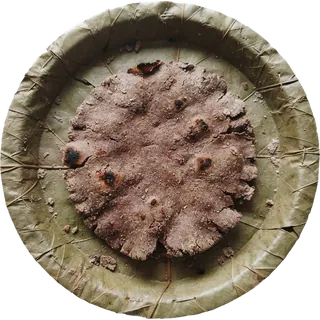
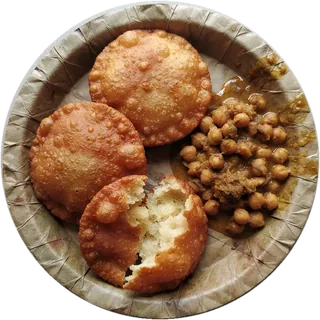
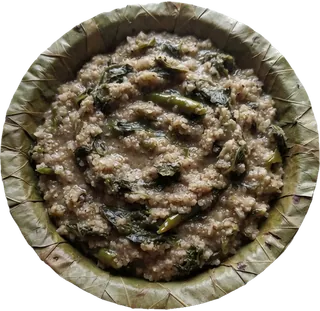
Chakod saag is made from the leaves of the chakod plant, a wild legume that grows along field edges and fallow land in Jharkhand during the monsoon, cooked down with garlic and green chilli until the leaves turn dark and bitter, and served with rice.
How to order
एक प्लेट चकोड़ साग दीजिए।
At a haat stall or household kitchen, ask ‘इसमें घी डाला है क्या?’ to confirm the saag has been finished in mustard oil alone, since festival-season versions occasionally add a spoon of ghee at the end.
History
Chakod saag is cooked in Nagpuri-speaking households across Ranchi, Gumla and Simdega districts of Jharkhand, where the chakod plant, a wild sickle senna that spreads along bunds and fallow land after the first monsoon rains, is gathered for its young leaves. The leaves are washed, boiled briefly to cut their bitterness, then chopped and fried in mustard oil with garlic and green chilli until they darken and reduce to a thick, coarse mass. It is eaten with rice and often alongside a lentil preparation, more common in the rainy months when the plant is at its most tender and widely available at local haats.
The dish is naturally vegan: the chakod leaves are boiled and then fried only in mustard oil with garlic, chilli and salt, with no ghee, dahi or milk added at any stage of cooking. It differs here from many Jharkhand vegetable preparations where a spoon of ghee is stirred in at the end for festival meals; chakod saag is not treated that way in the households that cook it regularly. A diner ordering it away from home need only confirm that the oil used is mustard oil and that no ghee has been added afterward, since that is the only point where dairy could enter.
Where to get it
Chakod saag is found at village haats and household meals in Nagpuri-speaking areas of Ranchi, Gumla and Simdega districts in Jharkhand, mostly during the monsoon months when the chakod plant is in leaf; it appears less often on restaurant menus than in home and community kitchens.