Rugra
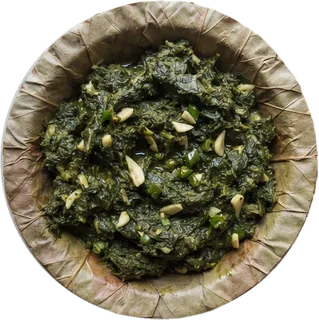
Rugra is a wild mushroom that emerges from the forest floor of Jharkhand's sal forests within days of the first monsoon rains, gathered by hand and cooked with onion and mustard oil into a thick, earthy dish eaten with rice.
How to order
एक प्लेट रुगड़ा दीजिए।
Rugra itself is cooked only with oil, onion and spices, but at a stall it is worth confirming with ‘इसमें घी डाला है क्या?’ since some sellers finish other forest-mushroom dishes with a spoon of ghee for richness.
History
Rugra, also called putka or phutka, is a wild mushroom gathered across the sal forests of Jharkhand, particularly in districts such as Khunti, Gumla, Simdega and West Singhbhum, where Munda, Oraon, Ho and Santal households collect it by hand in the days after the first monsoon showers soften the forest floor. The mushroom, a species of earthstar, pushes up from the soil in clusters through June and July and is sold fresh in local haats and Ranchi markets for a short window each year, since it does not keep and is rarely available once the rains settle into a steady pattern.
The dish contains nothing from an animal: the mushroom is cleaned, chopped and cooked with onion, garlic, mustard oil, turmeric and chilli, sometimes finished with a little tomato or amchur for sourness. No ghee is used to finish it and no dahi enters the marinade or the gravy, since the recipe depends on the mushroom's own moisture and the oil it is fried in to form its thick, dark sauce. The ingredients list stays short and plant-based throughout preparation and serving, with rice as the usual accompaniment rather than any dairy-based bread or side.
Where to get it
Look for it in weekly haats across Jharkhand's Khunti, Gumla and Simdega districts and in Ranchi's vegetable markets during the monsoon months of June and July, sold by Adivasi growers and foragers directly from baskets.