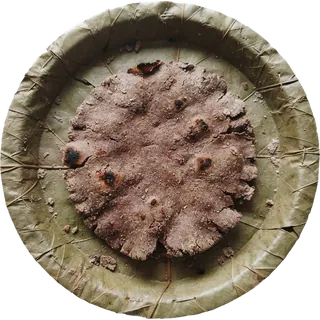
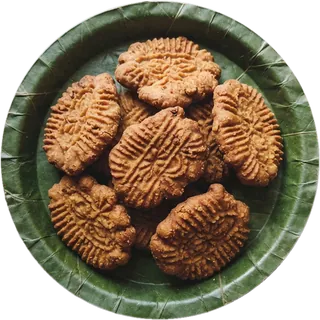
Dhuska
Ground rice and chana dal batter, dropped by the spoonful into hot oil, puffs into a golden disc eaten across Ranchi district in Jharkhand, usually alongside a spiced chickpea or potato side called ghugni or tarkari.
How to order
एक प्लेट धुस्का दीजिए।
The dhuska itself is made of only rice, dal and oil, but the side it comes with is the thing to check, so ask ‘घी या दही पड़ा है?’ about the ghugni or tarkari before it is served.
History
Dhuska is cooked in Nagpuri-speaking households across Ranchi district and the wider Chota Nagpur plateau in Jharkhand, and is sold at roadside stalls, weekly haats and railway station counters in Ranchi city itself. Soaked rice and chana dal are ground together into a thick batter, seasoned with ginger, green chilli and cumin, then dropped by spoonfuls into a kadai of hot mustard oil, where it puffs and browns on both sides. It is eaten as a breakfast or evening snack, most often with ghugni, a spiced chickpea side, or with aloo dum, and is also made at Sarhul and Karma festival gatherings.
The batter itself contains nothing beyond rice, chana dal, water and whole spices, and the frying medium is mustard oil or occasionally refined oil, never ghee or butter. Nothing in the standard recipe comes from an animal: no milk, no curd, no egg is worked into the batter, and no ghee is brushed on afterward the way it sometimes is on paratha. The only point worth checking is the side it is served with, since ghugni can be finished with a spoon of ghee in some stalls and the potato tarkari may carry a dairy-based tempering in restaurant versions, though the dhuska round itself stays the same either way.
Where to get it
Found at roadside breakfast stalls and tea counters across Ranchi, at weekly haats in Chota Nagpur towns, and at railway station food stands, mainly in the morning hours.