Leto
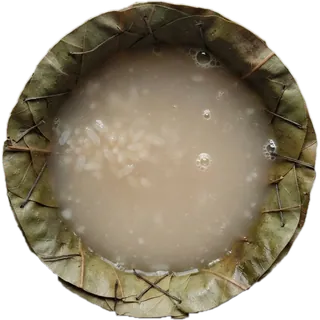
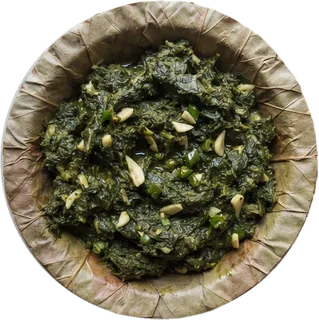
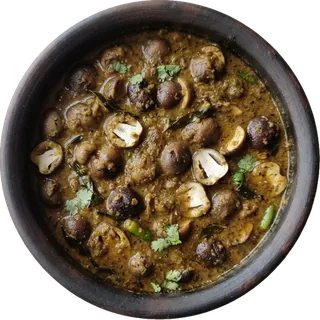
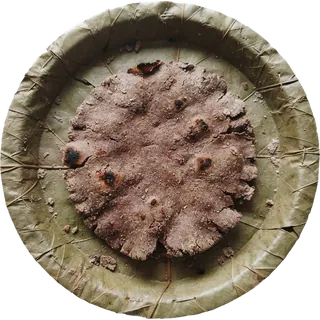
Leto is a thick porridge of mixed grains and pulses, simmered down with local greens and herbs until it holds together on a plate, eaten as a full meal rather than a side. Jharkhand's Adivasi households cook it from whatever grain the season has given them.
How to order
एक प्लेट लेटो दीजिए।
The grain-and-pulse pot itself is plant-based, but it is worth checking an eatery version by asking ‘इसमें घी डाला है क्या?’ before it is served, since some stalls finish it with a spoon of ghee for richness.
History
Leto is documented among Adivasi communities across Jharkhand's plateau districts, including Oraon, Munda and Ho households, as an everyday meal rather than a festival food. The pot combines two or more grains, such as rice, maize or finger millet, with a pulse like pigeon pea or black gram, cooked slowly in water with salt and chilli until the grains break down into a single thick mass. Local greens, often gathered rather than cultivated, are stirred in toward the end. Proportions shift with what the fields and forest edges have produced that month, so the same name covers a range of grain combinations from one village to the next.
The standard pot of leto contains nothing from an animal: grain, pulse, water, salt, chilli, greens and an oil such as mustard oil for finishing make up the dish as it is normally cooked. The animal question here is less about substitution than about variation between communities, since the mix of grains and pulses used for leto differs from one Adivasi group to another while the method itself stays free of dairy, fat drippings or meat stock. A diner should still check any version served in a town eatery, where cream or ghee is sometimes stirred in to richen the finish.
Where to get it
Leto is cooked at home in Adivasi villages across Jharkhand's Ranchi, Gumla and Simdega districts, and turns up at roadside eateries and village haats serving plain plate meals. It is also common food at harvest gatherings such as Sarhul and Karma, alongside other seasonal dishes.