Handia
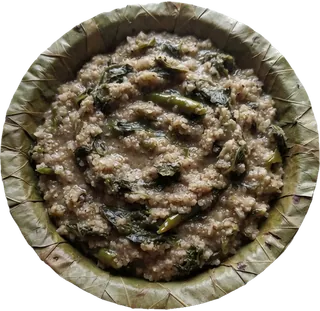
Handia is a fermented rice drink made across Jharkhand's Adivasi villages, most closely identified with Munda, Oraon and Ho households in Khunti district, where cooked rice is mixed with a herbal starter cake called ranu and left in an earthen pot for two to three days.
How to order
एक गिलास हंडिया दीजिए।
Handia sold in Khunti markets and at festival stalls is fermented rice and ranu only, but a visitor can confirm nothing else has been added by asking the seller, ‘इसमें घी डाला है क्या?’, since some roadside sellers thin or flavour their batch with extras.
History
In Khunti district and across the Chhotanagpur plateau, Munda, Oraon, Ho and Santhal households prepare handia for festivals such as Sarhul and Karma, for weddings, and for ordinary gatherings after farm work. Cooked rice is spread to cool, crumbled ranu - a cake of rice flour and ground forest herbs and barks, kept alive from batch to batch - is mixed in, and the mixture is packed into an earthen pot called a handi, sealed, and left to ferment for two to three days. The result is strained and drunk cloudy, often shared from a single pot passed between drinkers at a gathering.
Handia's fermentation uses nothing beyond rice, water and the ranu starter cake, so the standard drink made in Khunti households contains no dairy, ghee or other animal product at any stage. Ranu itself is a dry mix of rice flour with roots, bark and leaves gathered locally, combined into small cakes and sun-dried for reuse; recipes vary by household but stay within these plant ingredients. The only things a diner might watch for are additions some sellers make for taste or shelf stability, and the earthen pot itself, which is reused and only ever rinsed rather than treated with any animal-derived sealant. As sold at festivals and markets, handia needs no substitution to be plant-based.
Where to get it
Handia is sold at weekly haats in Khunti district, at Adivasi festival grounds during Sarhul and Karma, and from household stalls set up along village roads, usually ladled from a shared earthen pot into smaller cups or glasses.