Ganjang
Brine drawn off a jar of fermented meju blocks is boiled down into a dark, intensely salty liquid, used to season soups rather than as a table condiment. Farmhouses in Chungcheongnam-do and Gyeongsangbuk-do still keep decades-old jars, the oldest liquid nearly black and prized for ancestral-rite cooking.
How to order
멸치육수 말고 간장으로만 간해 주세요.
The sauce itself needs no checking, but the broth it goes into usually does, since most soups and stews are built on myeolchi-yuksu, anchovy and kelp stock, before the ganjang is ever added. Ask before the pot is started, not after, with "멸치육수 말고 간장으로만 간해 주세요" — once a stock has been simmering with anchovies, a kitchen usually cannot pull it back out.
History
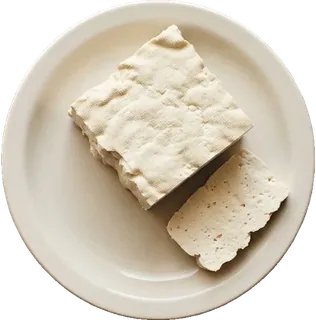
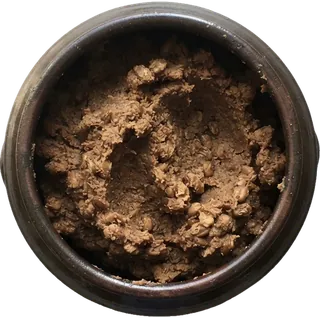
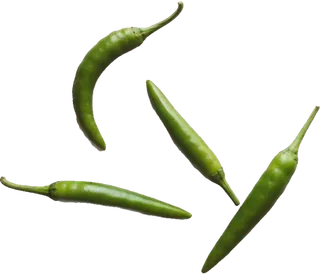
Ganjang (간장) is drawn from the same jars that produce doenjang: soybeans are boiled, pounded into meju blocks, and hung to dry and ferment over autumn, then submerged in brine with charcoal and dried chillies for weeks in late winter. The liquid drained off before the solids are mashed into doenjang is boiled down into ganjang — the guk-ganjang used for soup is the first, thinnest draw, fiercely salty, and later batches darken with age. Farmhouses in Chungcheongnam-do and Gyeongsangbuk-do keep jars for decades, some started before Liberation, the oldest nearly black and reserved for jesa, the ancestral memorial rite.
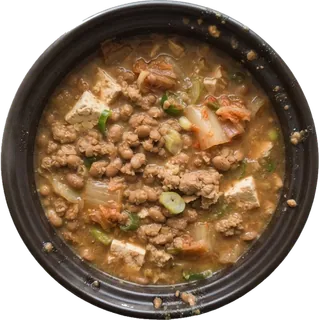
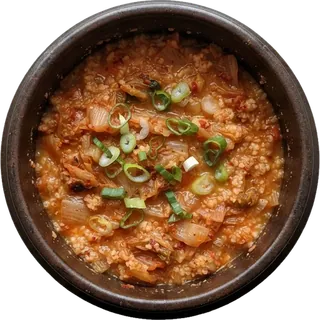
Ganjang itself holds none of the three places animal product usually enters Korean cooking: no jeotgal, the salted shrimp or fish sauce worked into kimchi paste; no myeolchi-yuksu, the dried anchovy and kelp stock under most soups; no egg at the table. The brine is soybean, salt and water, fermented and boiled down, nothing else added at any stage. The only thing worth checking is which soup it ends up seasoning — many guk-ganjang-based soups are built on an anchovy or beef stock the sauce only salts, so the ganjang clears itself but the bowl around it does not.
Where to get it
Farmhouse jang-makers in Chungcheongnam-do and Gyeongsangbuk-do sell it by the bottle at harvest markets and roadside jang villages, a one-litre bottle of young guk-ganjang running 15,000-25,000 won, a jar of ten-year brine several times that; city supermarkets carry factory versions for a few thousand won, but these are blended, mass-brewed products rather than jar-aged brine.