Izinkobe
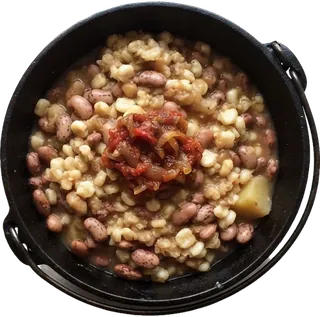
Whole dried maize kernels, boiled for three or four hours until they soften and split, then salted and eaten by the handful or spooned into a bowl. An everyday snack and side across KwaZulu-Natal, sold by vendors outside train stations and taxi ranks and cooked at home for a week's supply at a time.
How to order
Ngicela izinkobe ngaphandle kwenyama, ngiyabonga.
Ask whether the beans were cooked with butter or meat offcuts, since this varies by household and stall; use “Ngicela izinkobe ngaphandle kwenyama, ngiyabonga” to ask for it without meat. Vendors at KwaZulu-Natal taxi ranks usually run the stall in isiZulu, though English works in larger town markets.
History
Izinkobe is isiZulu for whole dried maize kernels boiled until they split and soften, distinct from samp — umngqusho in isiZulu and isiXhosa — which uses kernels crushed before cooking. Rural homesteads across KwaZulu-Natal keep a sack of dried maize year-round, setting a pot to simmer from early morning since the kernels need three to four hours over a fire to soften. The same maize moved with men recruited into the migrant labour system: workers carried dried maize north to the mines of the Witwatersrand, where it kept without refrigeration and became a staple cooked in bulk in the hostels that housed them.
Maize and salt make the dish on their own: kernels go into water and cook down until soft, salted at the end or at the table. Many cooks add sugar beans to the same pot, extending the maize and adding texture, and that addition is plant too. Nothing animal enters under ordinary preparation; the one point to check is whether a particular cook has stirred butter into the beans or added meat offcuts for flavour, which some households do but which is not part of the base recipe.
Where to get it
Street vendors outside taxi ranks and train stations across KwaZulu-Natal, from Durban's Warwick Triangle to smaller towns inland, selling it by the cup or bag for a few rand. Home pots run most of the year, more often in winter when stored maize is cheapest after the autumn harvest.