Ngülliw
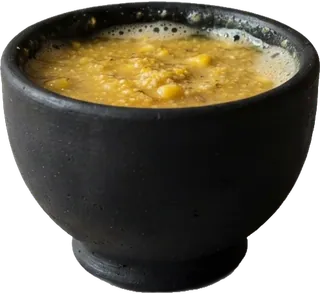
The seed of the pewén, the monkey puzzle tree, boiled or roasted in salted water until the shell splits open. Pewenche families in the Andean foothills of Araucanía and Biobío gather them each autumn and store them through the winter months.
How to order
¿Me podría dar ngülliw sin mantequilla, por favor?
The seeds themselves carry nothing to clear, but if butter or lard has been melted over them, or they've been folded into a stew with meat, ask before they're served: "¿Me podría dar ngülliw sin mantequilla, por favor?" In Pewenche communities the stall or market may run in Mapudungun as well, but Spanish is understood at every point of sale.
History
Ngülliw is the Mapudungun name for the seed of the pewén, the monkey puzzle tree, known as piñón in Chilean Spanish. Pewenche families gather it each autumn, March to May, in the Andean foothills of Araucanía and the Alto Biobío, near Lonquimay and Ralco. Seeds are knocked from the cones, then boiled or roasted until the shell splits, eaten fresh or dried and ground into flour for winter soups. They are shared at ngillatun ceremonies and traded at trafkintu, and Pewenche access to the forests was cut back first by the Chilean occupation of Wallmapu in the nineteenth century, then by logging, before the araucaria was declared protected in 1976.
The seed itself is entirely plant: boiled or roasted in salted water with nothing else added, shell split open and the kernel eaten by hand or ground into flour. No animal product enters at any stage of preparation. At some tables butter or lard is melted over the warm seeds, or they are folded into a stew that includes meat, and that only happens once the ngülliw is served, so the only thing to settle is what, if anything, gets added at that point.
Where to get it
Roadside stalls and Sunday ferias in the pewén country of Araucanía and Alto Biobío — Lonquimay, Melipeuco, Icalma, Ralco — sold by the kilo through autumn and into winter, roasted on the spot or packed dried; a kilo runs CLP 3,000-6,000.