Ulpo
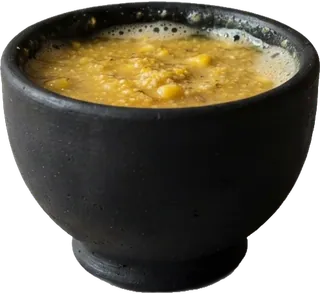
Toasted wheat flour is stirred into cold water or milk with sugar until it thickens into a drink thick enough to chew. Carried in a thermos to the fields and to school, it remains a midday standby across the rural south of Chile.
How to order
¿Me pasa un ulpo con agua no más, porfa?
Home cooks and roadside stalls often reach for milk by default since it makes a thicker, richer ulpo, so ask directly: “¿Me pasa un ulpo con agua no más, porfa?” In Mapuche households the kitchen conversation may run in Mapudungun, but a market stall or almacén counter almost always operates in Chilean Spanish.
History
Ulpo is a Mapudungun word for both the drink and the gesture of making it: toasted wheat flour, called harina tostada in Chilean Spanish and murke in Mapudungun, stirred into cold water or milk with sugar until it thickens past a liquid into something closer to a paste. It is made across La Araucanía, Los Ríos and Biobío, in Mapuche households and in the rural towns around Temuco, Valdivia and Los Ángeles, carried in a thermos or jar to the fields, to school, and drunk at midday or for an afternoon once (onces). Wheat itself arrived with Spanish colonization of Wallmapu; toasting grain into flour did not.
The base is plant throughout: toasted wheat flour, water and sugar, stirred together until thick. Milk enters in many homes in place of water, added during preparation rather than at the table, and once it goes into the jar it cannot be taken back out. The flour and sugar stay the same either way, so what has to be settled is simply whether milk or water goes in, and that has to be asked before the drink is mixed, not after it is poured.
Where to get it
Rural almacenes, school kiosks and home kitchens across La Araucanía, Los Ríos and Biobío, mixed to order or carried ready in a jar or thermos; most ulpo is made at home rather than sold, and where it does appear for sale a glass rarely costs more than CLP 500.