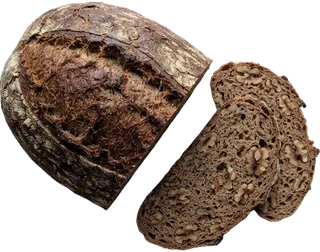
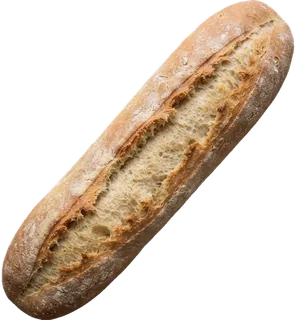
Sensler Rua-Brot
A flat rye-wheat loaf baked hard in the villages around Plaffeien, cut thin with a bread guillotine and softened in coffee or soup through the cold months.
How to order
Ich hätte gern ein Rua-Brot, bitte.
Ask the baker whether the loaf is ‘nur mit Sauerteig’ (made only with sourdough), since some bakeries soften newer versions with milk or butter even though the traditional Sense district dough contains neither.
History
Rua-Brot takes its name from Senslerdeutsch, the German dialect of the Sense district in canton Fribourg, where farming households in villages such as Plaffeien baked only a few times a year, often around All Saints' or before Christmas, to last through winter when roads to the valley ovens could close with snow. The dough combined rye and wheat flour in roughly equal parts, was formed into low, wide rounds about 30 centimetres across, and baked long and hard in wood-fired communal ovens shared by several farms. Families stacked the finished loaves in dry cellars or on wooden racks, cutting off portions as needed with a hinged bread guillotine kept in the kitchen.
Every ingredient in Rua-Brot is plant in origin: rye flour, wheat flour, sourdough starter, water and salt, with no milk, butter, egg or lard worked into the dough at any stage of the Sense district recipe. Where dairy enters Sensler cooking is usually at the table rather than in the loaf itself — Rua-Brot was often dunked in warm milk, in café au lait, or in a buttered soup, so a diner choosing a plant-based version should ask about what the bread is served or sold alongside, not about the dough, which has never contained animal products.
Where to get it
Village bakeries and farm shops in the Sense district, especially around Plaffeien, sell it fresh after the autumn and pre-Christmas baking days, with hardened loaves available from cellar stock through the winter.